
We all have them; little spots, dots, and bumps scattered across our skin. Some have been there since childhood, while others seem to pop up overnight. For most people, these markings are completely harmless moles that simply add character to our skin. However, because skin cancer is the most common form of cancer in the United States, it is completely natural to look at a new or changing spot and feel a sudden wave of anxiety.
It can be difficult to tell the difference between a benign blemish and a serious medical issue just by looking in the bathroom mirror. Understanding what to look for can save your life. At Western Reserve Dermatology, we emphasize that early detection is the absolute best defense against skin cancer. If you are ever unsure about a spot on your body, visiting a qualified dermatologist in Beachwood, OH, is the safest choice you can make for your long term health. Let us explore how you can evaluate your skin at home and learn when it is time to schedule a professional evaluation.
Understanding Your Skin: What Is a Harmless Mole?
Before you can spot the warning signs of skin cancer, it helps to understand what a normal, healthy mole looks like. Moles occur when pigment producing cells in the skin, known as melanocytes, grow in clusters rather than spreading out evenly.
The Common Nevus
A standard, harmless mole (known medically as a common nevus) is usually a small brown, tan, or pink spot on the skin. It typically features a distinct, round, or oval shape with symmetric halves. The edges are clean and well defined, and the entire surface is usually uniform in color. Most common moles are smaller than six millimeters in diameter, which is roughly the size of a standard pencil eraser. These spots can be flat or raised, and they generally remain stable over time. If a mole looks exactly the same today as it did five years ago, it is highly likely to be entirely benign.
Atypical Moles (Dysplastic Nevi)
Sometimes, you might notice moles that look a bit unusual but are still not cancerous. These are called atypical moles or dysplastic nevi. They tend to be larger than common moles and may feature irregular borders or a mixture of colors. While atypical moles themselves are benign, having a large number of them can increase your overall risk of developing skin cancer. Individuals with these types of spots should be especially diligent about scheduling an annual skin cancer screening to keep a close eye on any subtle shifts.
The Warning Signs: The ABCDEs of Skin Cancer
Dermatologists use a simple, memorable alphabetical guide to help patients identify the warning signs of melanoma, which is the most dangerous form of skin cancer. Memorizing this system can help you perform effective monthly self exams at home.
A is for Asymmetry
If you were to draw an imaginary line directly through the center of a healthy mole, both halves would look like matching mirror images. Cancerous lesions, however, rarely grow uniformly. If one half of your mole looks completely different in shape, size, or thickness compared to the other half, that asymmetry is a primary warning sign that requires professional evaluation.
B is for Border
Healthy moles have smooth, even, and clearly defined boundaries. The edges of a skin cancer lesion are often jagged, notched, blurry, or irregular. In some cases, the pigment may look like it is bleeding or spreading out into the surrounding skin. If the boundary line of a spot looks map-like or poorly defined, it should be examined by a specialist.
C is for Color
A benign spot is almost always one solid, consistent shade throughout. It might be light tan, dark brown, or pink, but it will be uniform. If a single spot contains a chaotic mix of colors, such as varying shades of brown, black, blue, red, or white, this is a major red flag. Multi colored spots are one of the most reliable signs of melanoma.
D is for Diameter
While some skin cancers can be caught when they are very small, most malignant spots are larger than six millimeters across by the time they catch a patient's attention. If you notice a spot that is larger than a pencil eraser, you should have it evaluated, even if it does not show any of the other warning signs.
E is for Evolving
This is arguably the most critical factor of all. A healthy mole generally stays the same size, shape, and color for decades. If a spot on your skin is actively evolving, meaning it is growing larger, changing color, altering its shape, or beginning to itch, bleed, ooze, or crust over, you need to see a board certified dermatologist right away.
Types of Skin Cancer to Watch For
Not all skin cancers look the same, and they do not all originate from the same types of cells. Knowing the distinct variations can help you spot issues early.
Melanoma
As mentioned, melanoma develops in the pigment producing cells. It can develop within an existing mole or appear suddenly as a new dark spot. Because it has the potential to spread to other organs if left untreated, recognizing the signs of melanoma early is absolutely essential for a successful cure.
Basal Cell Carcinoma (BCC)
This is the most common variety of skin cancer. It usually develops on areas of the body that receive heavy sun exposure, such as the face, neck, and arms. Basal cell carcinoma often looks like a shiny, pearly bump, a pink patch of skin, or a sore that heals and then opens back up again. It grows very slowly and rarely spreads, but it can cause significant tissue damage if ignored.
Squamous Cell Carcinoma (SCC)
Squamous cell carcinoma also shows up on sun exposed areas. It typically presents as a firm red bump, a scaly patch, or a rough, wart-like growth that may bleed easily. Like basal cell carcinoma, it is highly treatable when caught early but can become invasive if left to grow without medical intervention.
When to See a Professional
Self exams are a wonderful habit, but they cannot replace the trained eye and advanced technology of a medical expert.
The Ugly Duckling Sign
Beyond the ABCDE guidelines, look out for what dermatologists call the ugly duckling sign. Most of the normal moles on your body will look similar to one another; they share a similar color palette and pattern. If there is one specific spot that looks entirely different from all the others, it is the ugly duckling of your skin. This standout spot should always be professionally evaluated.
Annual Skin Cancer Screening
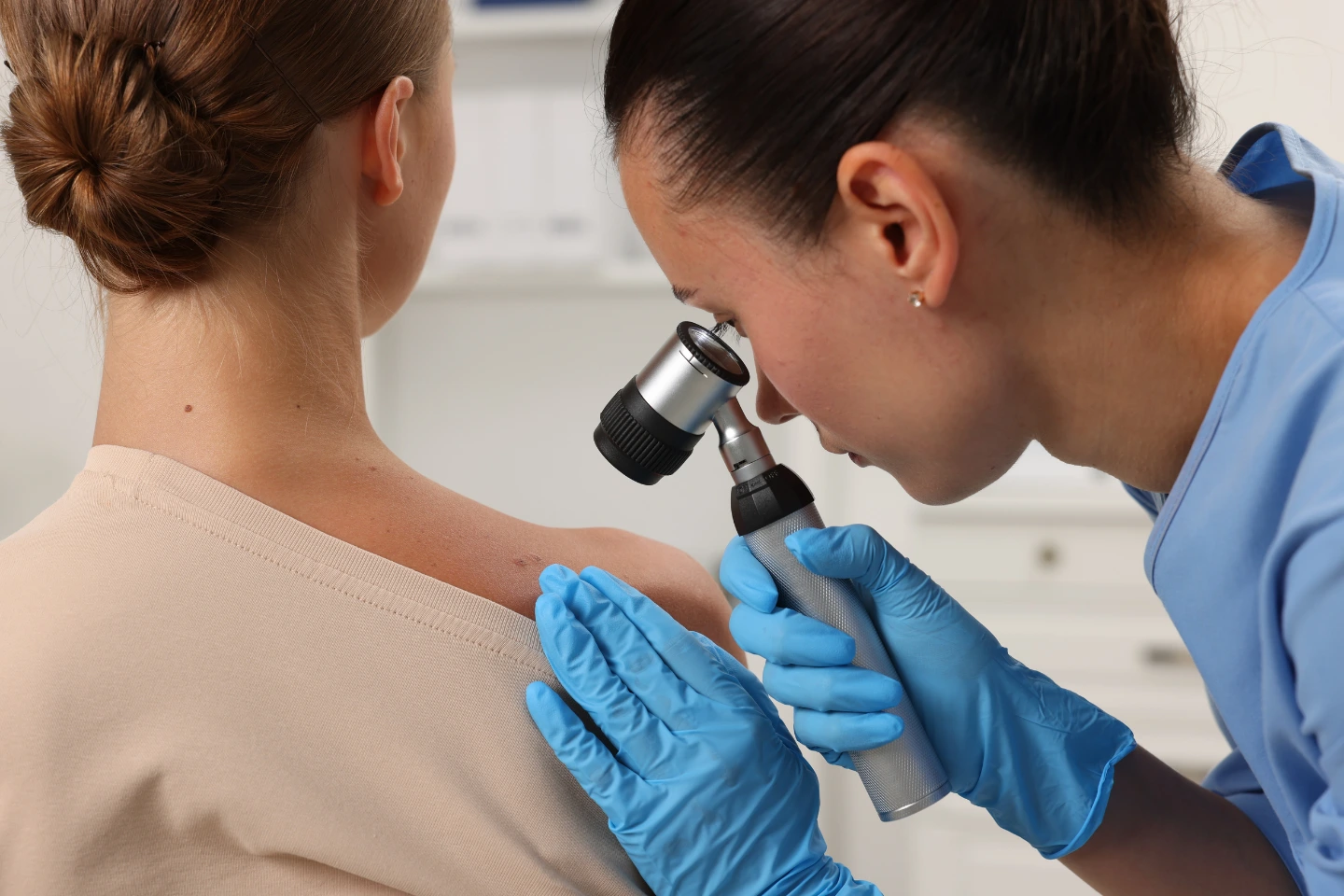
Even if you do not find any suspicious spots during your home exams, scheduling an annual preventive evaluation is highly recommended. A specialist uses a specialized magnifying tool called a dermatoscope to see deep into the layers of your skin, spotting microscopic cellular changes long before they become visible to the naked eye. If an issue is found, a quick, in office mole removal or biopsy can provide definitive answers and peace of mind.
Schedule Your Professional Mole Check in Beachwood, OH
Protecting your skin health does not have to be an overwhelming or stressful journey. At Western Reserve Dermatology, our dedicated medical team provides thorough, compassionate care to ensure you feel secure in your skin. If you have recently discovered a changing spot, an unusual growth, or if you are simply overdue for your routine preventative check, we are here to support you. Contact our welcoming team today to schedule your comprehensive skin cancer screening with an experienced dermatologist in Beachwood, OH.
Frequently Asked Questions
Can a harmless mole turn into cancer later?
Yes, it is possible, though most melanomas actually arise as brand new spots on previously clear skin. However, an existing benign mole can undergo genetic mutations due to ultraviolet radiation from the sun or tanning beds, causing it to transform into a malignancy. This is why tracking changes in older moles is just as important as watching for new ones.
How often should I check my own skin at home?
It is highly recommended to perform a comprehensive self exam once every month. Choose a well lit room with a full length mirror, and use a hand mirror to check hard to see areas like your back, scalp, and the backs of your thighs. Consistent checking helps you become deeply familiar with your skin patterns, making it much easier to notice when something new appears.
What does a skin biopsy feel like?
A skin biopsy is a quick, straightforward, in-office procedure. Your provider will numb the area completely with a local anesthetic, so you will not feel any pain during the process. Afterward, you might experience mild tenderness as the site heals over the next few days, leaving a minimal mark.
Are people with dark skin at risk for melanoma?
Absolutely. While individuals with fair skin produce less protective melanin and have a higher statistical incidence of skin cancer, anyone can develop the disease. In darker skin tones, melanoma is often diagnosed at later stages because it frequently appears in less obvious places, such as under the fingernails, on the palms of the hands, or on the soles of the feet.
Schedule Your Visit!
*First Name
*Last Name
Your Email
*Phone Number
*Preferred Appointment Date & Time
Comments
(Requested time is not final until you receive confirmation from our office) I allow this website to store my submission so they can respond to my inquiry
At Western Reserve Dermatology, we recognize the uniqueness of each patient's health concerns.


Privacy Policy | © 2025 Western Reserve Dermatology | All rights reserved | Digital Marketing by Remedo